






Global

What We Saw When Facing -253°C: The Journey to the Birth of the World's First "Liquid Hydrogen Booster Pump"

Extremely low temperature, low density, and low viscosity
Unprecedented
Taking on the challenge of developing the unknown


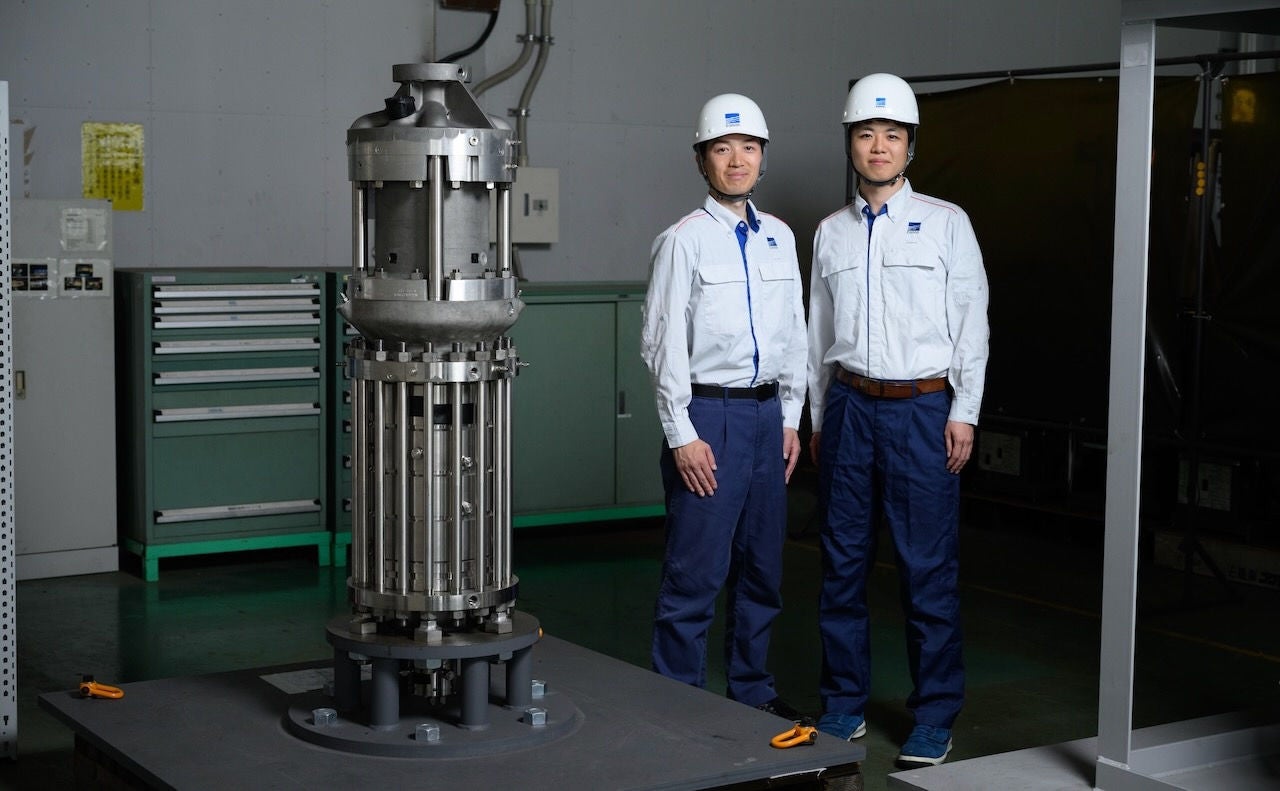
Hydrogen is expected to be the next generation energy source. EBARA Corporation is working on a new business venture related to Hydrogen. We have also developed the world's first "liquid Hydrogen booster pump" for Hydrogen power generation. However, liquid Hydrogen requires an extremely low temperature environment of -253°C, and this pump must also operate in that environment. It was truly an unknown development. How did you achieve success?

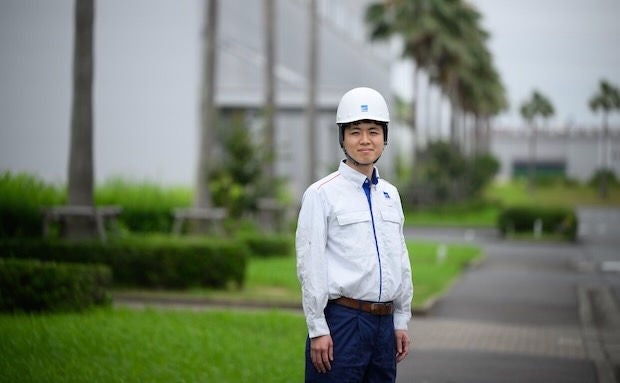
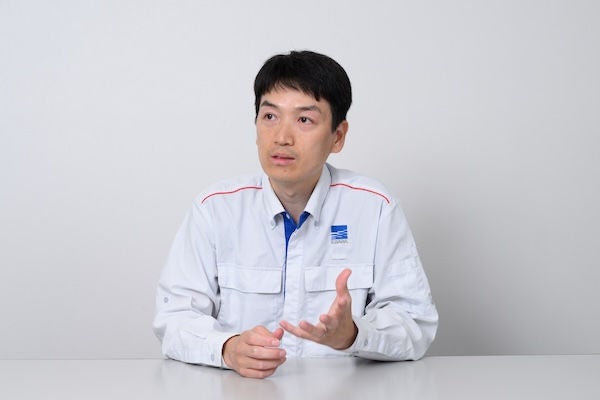
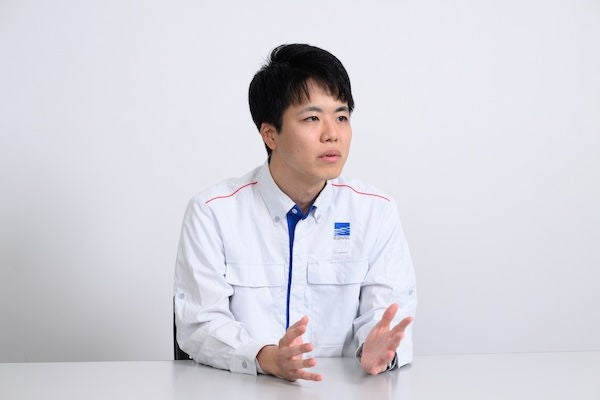
Hayato Ikeda and Akihiro Hara of the Development Section, Hydrogen Rotating Equipment Technologies Department, CP Hydrogen Strategic Business Unit, looked back on the development process.
Why take on the challenge of developing a liquid Hydrogen pump?

--EBARA has a wealth of know-how regarding pump products, but liquid Hydrogen is still extremely difficult to handle, and there were various hurdles in developing this pump. First of all, what are the difficulties with liquid Hydrogen?

Ikeda: The most notable issue is the need for an extremely low temperature environment of -253°C. The liquid Hydrogen booster pump we made is designed for Hydrogen power generation. Hydrogen, which is used as fuel, takes up a large volume in its gaseous state, making it inefficient to transport. It is then liquefied, but to do this it must be cooled to -253°C. Our pumps also need to be able to operate in that temperature environment.

At such extremely low temperatures, various assumptions must be made. For example, temperatures as low as -253°C can cause the pump material to shrink. Moreover, the shrinkage rate varies depending on the material. You have to design with these things in mind.

Hayato Ikeda
CP Hydrogen Strategic Business unit, Hydrogen Rotating Equipment Technologies Department, Development Section

Hara: Furthermore, liquid Hydrogen has an extremely low density and is compressible, which makes pump development more difficult. For example, 1 cubic meter of water weighs 1 ton (1,000 kg) and is almost incompressible, so its density can be considered constant. However, liquid Hydrogen weighs only about 70 kg for the same volume, has extremely low density, and its density also varies. Developing a pump that handles such distinctive fluids requires the appropriate technology.

Ikeda: It is also important to fully understand and take care of its characteristics, such as its extremely low viscosity and high flammability.

--Despite all the difficulties, why did EBARA decide to start the Hydrogen business?

Ikeda: This is because we want to contribute to the realization of a carbon-free society. EBARA has grown by contributing to society. Promoting the use of clean energy such as Hydrogen is also in line with the company's philosophy and ethos.

In addition, EBARA has the technical capabilities to handle liquid Hydrogen. For example, in the area of cryogenic technology, we have a long track record of delivering pumps for LNG (liquefied natural gas) that are handled in environments of -162°C. We would like to utilize these experiences to contribute to a Hydrogen society.

Six years of progress and the joy of creating something that doesn't exist in the world

--EBARA launched its Hydrogen business in earnest as a new business in August 2021. This project was carried out directly by the president. Did development of the liquid Hydrogen pump also begin around that time?

Ikeda: Actually, I had been working on it since around 2017, long before that. We started out as a team of three. In fiscal 2019, as part of a project funded by the New Energy and Industrial Technology Development Organization (NEDO), we began developing the world's first Hydrogen booster pump for Hydrogen power generation, which is required to supply Hydrogen to hydrogen power generation gas turbines.

The NEDO project is a four-year project that will run until fiscal year 2022. First, we built it based on EBARA's LNG pump. We also got employees involved in the product design involved and increased the number of members.

While these activities were ongoing, the Hydrogen business began in earnest in 2021, and development of liquid Hydrogen pumps was further strengthened.

Hara: I joined EBARA in May 2022, and I came here precisely because I wanted to be involved in the Hydrogen business. Since then, in addition to mainly developing liquid Hydrogen pumps, he has also been widely involved in product development related to EBARA's Hydrogen supply chain.

Ikeda: FY2022 marks the final year of the NEDO project. You actually built a prototype pump and conducted performance evaluation tests. JAXA's Noshiro Rocket Test Site (Noshiro City, Akita Prefecture) has facilities capable of handling liquid Hydrogen, so the experiment was carried out there. However, since the facility is primarily a testing site for rocket engines that use liquid Hydrogen, pump testing cannot be carried out immediately. What kind of experiment do you want to do and what do you need? We started by discussing the test facilities with JAXA.

We were also able to complete the project with the cooperation of many people from other departments, including the Futtsu Plant and EOL (EBARA Open Laboratory), both at the plant and on-site.

--How was the exam?

Ikeda: I remember being impressed the moment the pump started for the first time. The test was carried out several times and the target value was successfully achieved. I was really happy. This prototype led to the development of the liquid Hydrogen booster pump.

--Counting from 2017, it's been about six years. What motivated you to continue?

Ikeda: I think it was being able to design a pump that didn't exist before and carry out all the experiments myself. I faced a variety of challenges, but I think it was very rewarding. The number of members gradually increased, and many mid-career hires, including Hara-san, joined the company. It was also stimulating to hear a variety of opinions.

Why "disassemble" something that has been made so far?

--In the future, this liquid Hydrogen booster pump will be rolled out to the market, right?

Ikeda: I agree. At the same time, we will develop a more efficient liquid Hydrogen pump. The most important thing is to move away from the LNG pump that has been the base so far. It is important to learn from LNG technology, but rather than thinking of it as an extension of that, we focused on what functions our customers needed to achieve their goals, and then created a pump that would achieve them. Hara-san is at the center of development on these themes.

Hara: There are many aspects of LNG pump technology that can be applied to the development of liquid Hydrogen pumps, but of course there are also many different characteristics. If that's the case, there may actually be a way to create a pump with a completely different structure than the current one.

So what we are currently doing is disassembling the liquid Hydrogen and LNG pumps that we have made to examine their functions. Furthermore, we are also working to extract the functions and technologies that are truly necessary and reconstruct the optimal liquid Hydrogen pump concept from scratch.

--It must take a lot of courage for you, Hara, who joined the team midway through, to start from scratch and start over from scratch with everything that had been built up until then. 
Akihiro Hara
CP Hydrogen Strategic Business unit, Hydrogen Rotating Equipment Technologies Department, Development Section

Hara: Perhaps I can do this because I am working under the direction of the boss in this department and because of the atmosphere in this team. No one will outright reject someone's proposal just because they have less experience, and everyone respects each other. Many employees join the company mid-career, so they don't feel uncomfortable voicing their opinions just because they joined mid-career.

Ikeda: In fact, the leader of our organization is someone who has been involved with LNG pumps. Of course, there must be some sentiment behind it. However, the leader himself said, "We need to move away from the LNG pumps" and "Let's rebuild it from scratch." That's why the whole team can do this.

--Please tell us about your future prospects.

Hara: A major milestone going forward is the establishment of a new testing and development center for Hydrogen related products at EBARA. Until now, testing using actual cryogenic liquids has only been possible in limited locations in Japan. Because we are dealing with an unknown substance such as liquid Hydrogen, it is necessary to repeatedly validate the situation through actual testing. If we have the facility ourselves, we will be able to improve development speed and product precision.

Ikeda: EBARA is a company that contributes to society and has been responsible for the infrastructure of society. That will continue to be the case. We would like to be a presence that builds the foundation for achieving a carbon-free society. I also want to become an indispensable part of it. We develop products by getting to the heart of what our customers and society want, and by getting to the essence of manufacturing.