







Global

"Creating Standards" for Hydrogen:
World's First Project Enabling Testing at -253°C

Liquid Hydrogen Test and Development Center
Taking on the launch with all our might


What is needed to create a world-first facility? EBARA Corporation will launch a new Hydrogen business in 2021 and is currently developing liquid Hydrogen pumps and other products. To accelerate this business, we have also begun construction of a testing and development center for Hydrogen-related products, which will be the world's first full-scale commercial product testing facility using actual Hydrogen liquid at -253°C. Why build such a facility? And how did the members involved in establishing the center proceed with this unprecedented project?

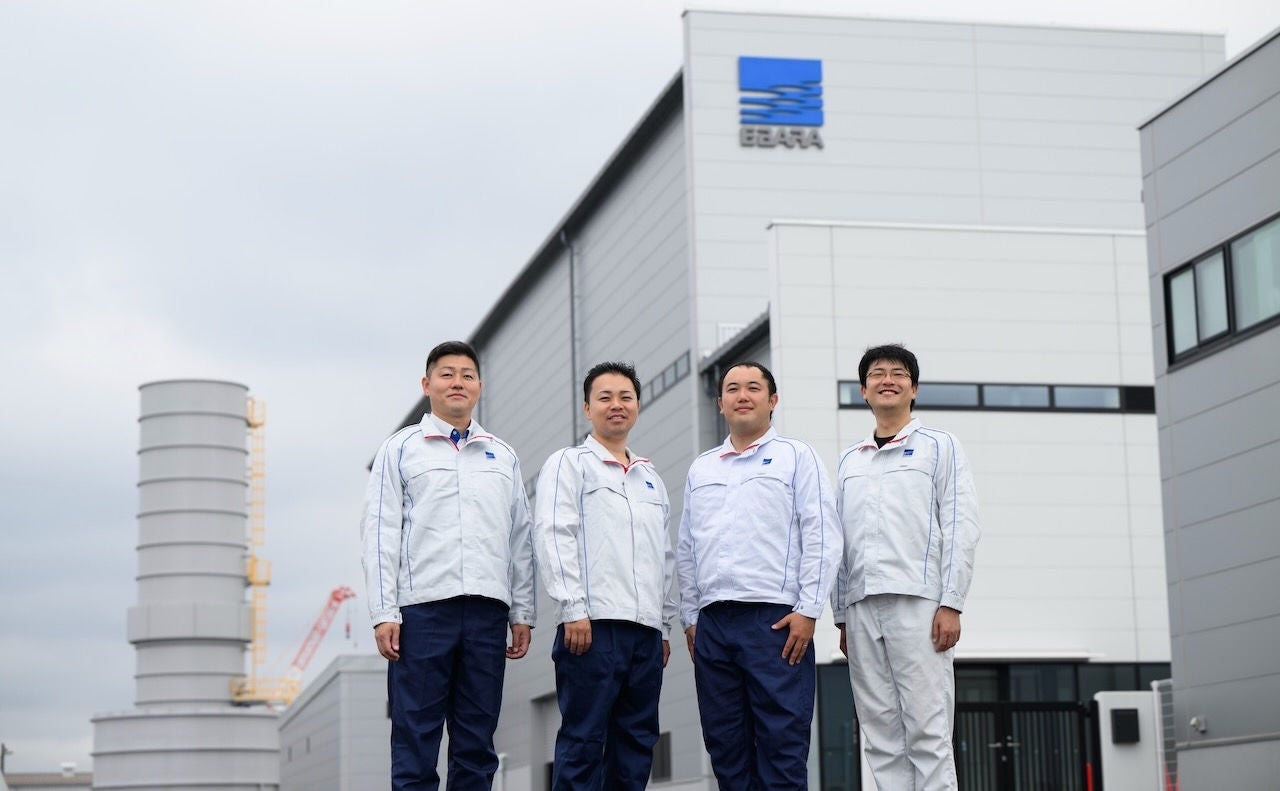
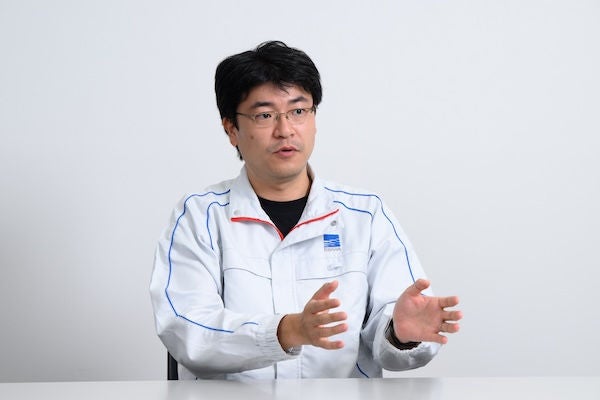
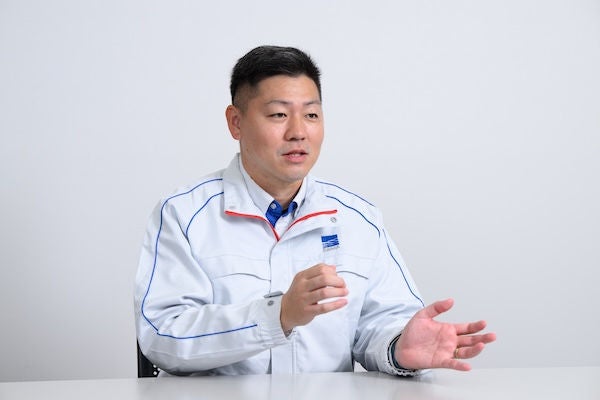
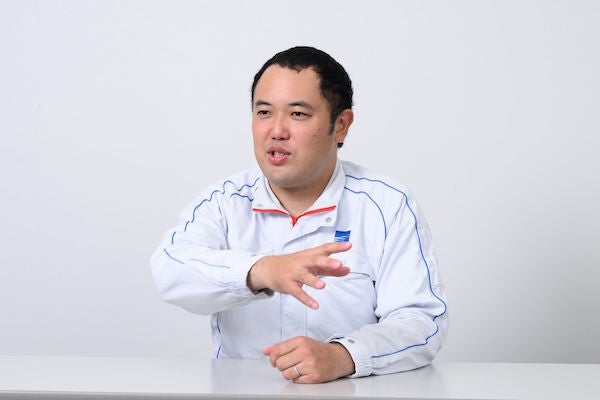
We interviewed with Hiroshi Arai and Yu Nakamura of the Product Testing and Development Center of the CP Hydrogen-Related Strategic Business Unit, and Yohei Urano and Shohei Iijima of the Engineering Department of the business unit.
A project that demonstrates "seriously committed to Hydrogen"

--What led to the decision to establish a testing and development center?

Iijima: Hydrogen, which has a low environmental impact, is attracting attention as a "next-generation fuel," and its use is being considered both domestically and internationally. We have been working on product development since 2021 in an effort to make its Hydrogen business as a new core business. We plan to utilize our technology in three areas: producing, transporting, and using Hydrogen , and have already succeeded in developing the world's first liquid Hydrogen boost pump for Hydrogen power generation.

When developing these products, it is essential to confirm their quality through performance tests using actual liquid Hydrogen. However, there are very few large-scale test facilities in Japan that can handle liquid Hydrogen, and even if there are, they are small in scale or are shared by various organizations. For EBARA to fully implement this business, We would need to have its own testing facilities. In order to release products responsibly to the world, it is important that we test and verify them ourselves. This led to the construction of the center.

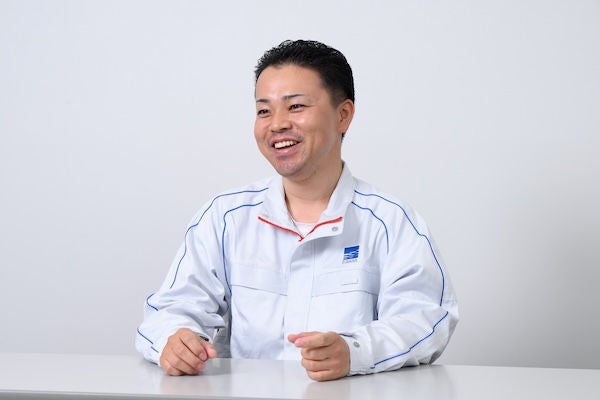
Shohei Iijima
CP Hydrogen Strategic Business Unit, Engineering Department, Electrical and Instrumentation Design Team

Urano: This time, the center is Commercial products at full scale This enables product performance testing and elemental technology development using actual Hydrogen liquid. This will be the world's first facility capable of conducting such high-level testing on such a large scale. This can be seen as a declaration of EBARA's determination to "Fully committing to the Hydrogen business."

Arai: In order to utilize Hydrogen, it must be converted into liquid Hydrogen, as its volume is too large in gas form, making it difficult to transport. To do this, the temperature must be kept at an extremely low level of -253°C. Although it is very difficult to handle, the company has a number of technologies that can be applied to liquid Hydrogen.

For example, EBARA has also developed pump products for liquefied gases such as LNG (liquefied natural gas). LNG needs to be cooled to -162°C, and like Hydrogen, it requires cryogenic know-how. Previously, EBARA also owned a LNG testing facility. This was one of the few liquefied gas testing facilities in Japan. We are building the center by utilizing this knowledge and incorporating the new element of liquid Hydrogen.

In fact, I was once an operations member at a liquefied gas testing facility, and I volunteered to take on this project in order to put that experience to good use. The other three were job-changers, and all of them came here because they wanted to be involved in the Hydrogen business.

Iijima: Each member has a different background, and start-up team. We are four fresh members (laughs).

Deciding on equipment Specifications that take into account the "unique characteristics of Hydrogen "

--What are the roles of each of you four?
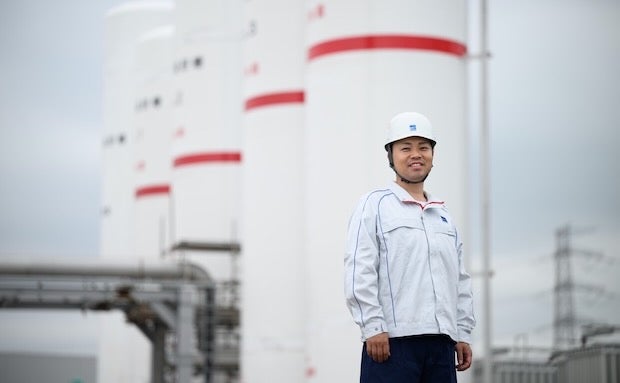
Yu Nakamura
CP Hydrogen Strategic Business Unit Product Testing and Development Center

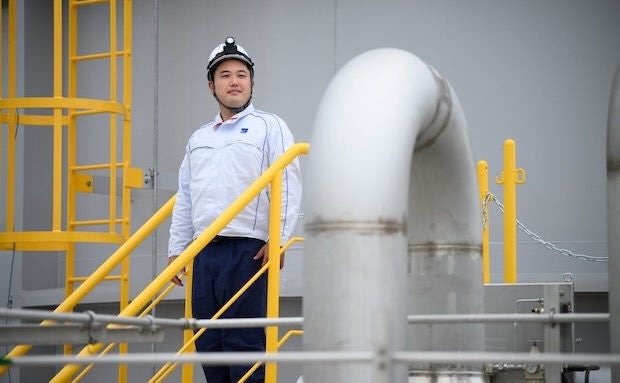
Nakamura: Mr. Arai and I are the ones who "use the center," meaning we actually administer the exams. Urano and Iijima are the ones who are "Engineering the center." We, the users, tell them what kind of tests we want to do and what kind of environment we need, and the members who make the equipment listen and consider the selection and placement of the equipment.

Iijima: Typically, such projects have a model or referenced facility, but this one is unprecedented. This is the first Hydrogen testing facility of this scale in the world. It's hard to have to think of everything ourselves, but it's also exciting.

--Liquid Hydrogen is said to be very difficult to handle. Are there any hurdles to overcome when building testing equipment?

Nakamura: That's right. Not only does it require an environment of -253°C, but Hydrogen is also highly flammable. When space is taken as 100, it is said that an explosion occurs when the gas concentration exceeds 30%, but for Hydrogen, this limit is extremely low at just over 4%. Even a small amount of static electricity or a spark can cause a fire. Since the tests are conducted under such circumstances, it is important to ensure safety. Careful consideration is also required for tools used on-site, such as specifications they do not generate sparks.

Urano: Another characteristic of Hydrogen is that it is a very small element and can easily enter various substances. This causes to deterioration of equipment and facilities that handle Hydrogen. Considering these characteristics, it is necessary to select equipment and materials that are durable enough to withstand the test of time.

--You need to be careful when choosing equipment. Is there anything you keep in mind when doing so?

Iijima: It's about Identifying reliable factors enough to that make you feel confident that "this device will do the job." If there is a certain device, is the theory sound? Can it be said ensure the risks are minimized after listening to the opinions of many people from various angles? Has appropriate verification been carried out? Because we create something that doesn't exist in the world, it's important that we can believe in it.

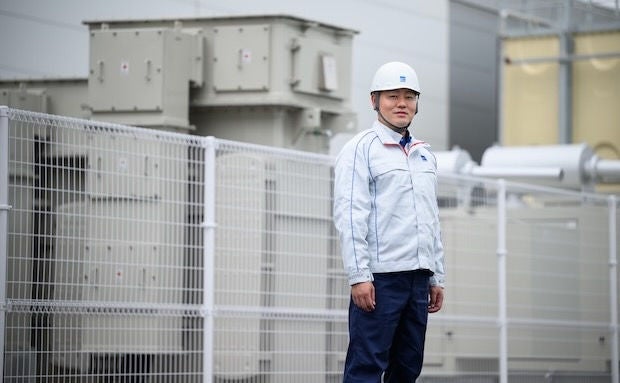
Yohei Urano
CP Hydrogen Related Strategic Business Unit Engineering Department

Urano: In that sense, the company has a wide range of specialists, and the head of the Hydrogen business is willing to listen to what I have to say frankly. It's a positive thing to have an environment where you can gather a variety of opinions.

We would like to share this equipment know-how with external parties.

--You all said that you transferred or changed jobs because you wanted to work in the Hydrogen business. What do you find most rewarding about being involved in launching this center?

Arai: After all, it's the opportunity to try new things. When creating a unique facility, what kind of equipment and operations would be best? We all worked together to come up with the best way to do it. I'll never forget that process.

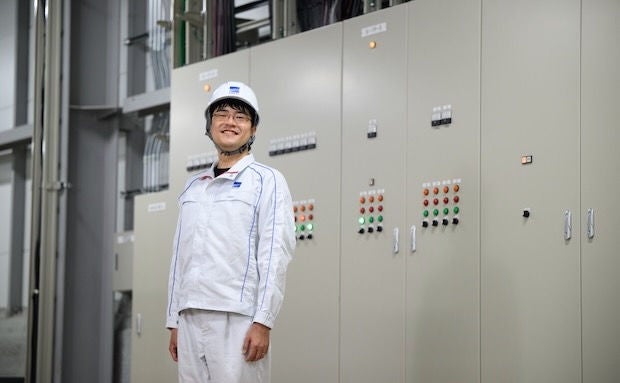
Hiroshi Arai
CP Hydrogen Strategic Business Unit Product Testing and Development Center

Nakamura: When selecting equipment, we check each item in detail with the manufacturer to ensure that it can safely handle liquid Hydrogen. It takes time, and it's all new to me so it's difficult, but I'm having fun every day. It's a relief that everyone is so cheerful (laughs).

Urano: To begin with, it was rewarding to be involved in this project. It's definitely something to brag about (laughs). Moreover, I was able to participate from the very beginning, laying the foundation, which was a valuable experience for the future. There are times when it's tough, but my boss always tells me, "You're taking on so many challenges, so try to enjoy it." I treasure those words.

Iijima: It's nice to see something that we've all worked on together come to fruition. I am also in charge of a wide range of work, from measuring instruments such as thermometers and pressure gauges to equipment control software. Therefore, the important thing is not only to introduce what is needed now, but also to leave a certain amount of room for adding new equipment in the future. If we don't do this, we'll be in trouble if we later find ourselves saying, "We don't have the capacity to install this equipment." How much leeway should we create in anticipation of future development? I think this is where the owner engineer's skills come into play.

--What are EBARA's strengths in moving forward with this unprecedented project?

Urano: I think it's because the organization is flat and people from all walks of life can consult with each other. When it comes to new businesses and projects, there are many issues that cannot be resolved by one person alone. It will be necessary to combine the wisdom of many different people. At EBARA, there are no divisions between departments, and you can freely consult with management. I think the fact that you can talk freely with management at a company of this size is a sign of that.

Iijima: He even comes to our department's year-end party (laughs). I think it is because of this culture that the entire company is able to pool its wisdom.

-Please tell us about your future prospects.

Iijima: Personally, I have always wanted to create a "standard for the world." I would like this facility to become that kind of facility. It has become known as the standard for Hydrogen testing facilities. That's the goal.

Urano: I would also like to share the know-how I have cultivated this time with companies both in Japan and overseas. There are many people who are trying to contribute to building a Hydrogen society. We would also like to share our knowledge about liquid Hydrogen testing know-how and the equipment required.